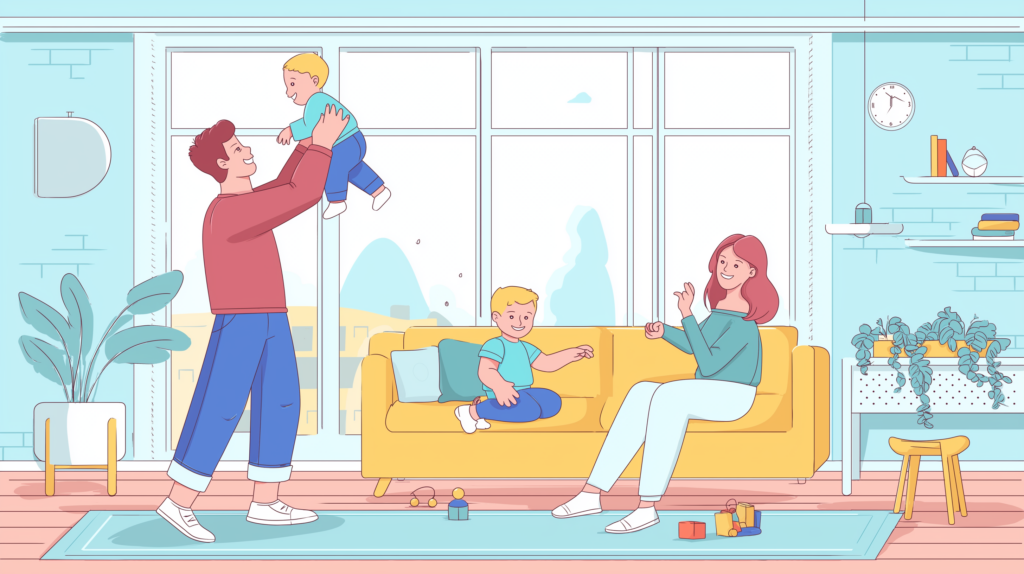
So why do people celebrate half birthdays? The short answer is that a single annual birthday is not always enough — and for millions of children, babies, adults, and families around the world, the halfway point of the year has become a meaningful tradition in its own right. But the real reasons go deeper than just wanting more cake.
In this guide you will find every reason people celebrate half birthdays, who started the tradition, and whether it actually makes sense for you to celebrate one too.
First, find your exact date using our free half birthday calculator — then read on to discover why so many people mark it every year.
Table of Contents
Why Do People Celebrate Half Birthdays?
People celebrate half birthdays for five main reasons — and each one is rooted in something real: inclusion, milestones, joy, connection, and the simple human desire to mark the passing of time with the people we love.
A half birthday falls exactly six months after a person’s real birthday — the precise midpoint between one birthday and the next. For most people this means adding six months to their birth month and landing on the same day number. Use our half birthday calculator to find yours instantly.
The five reasons below cover the full picture — from children who cannot celebrate at school to parents marking a baby’s growth, from teachers trying to include every student to adults who simply believe joy should not be rationed to once a year.
Reason 1: Summer Birthday Kids Miss School Celebrations
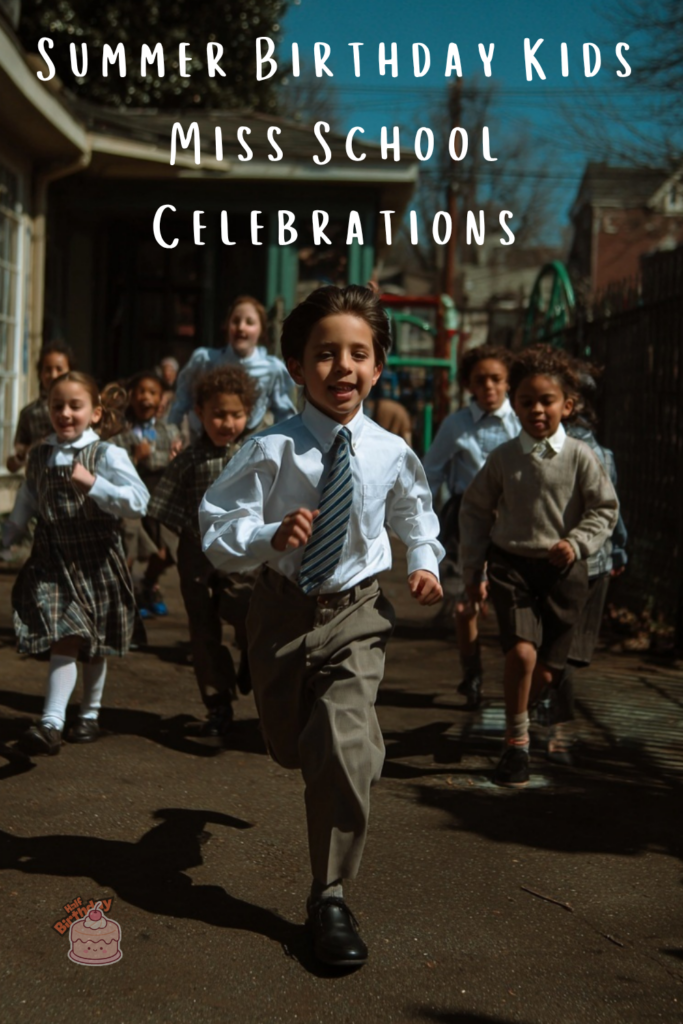
The single most common reason people celebrate half birthdays is that a child’s real birthday falls during summer vacation — when school is out and classmates are unavailable.
For a child born in June, July, or August, the classroom birthday experience — cupcakes, a birthday crown, the class singing together — simply does not happen on the actual date. By the time school resumes in September, the moment has passed.
The half birthday solves this completely. A child born on July 15 has a half birthday on January 15 — right in the middle of the school year. That is the date when the cupcakes come out, the song gets sung, and the child gets their classroom moment.
This matters more than it might seem. Research in early childhood development consistently shows that feeling celebrated and recognised by peers plays a meaningful role in a child’s sense of belonging at school. A summer-birthday child who never gets a classroom moment can feel subtly left out year after year — and the half birthday closes that gap entirely.
For many families, this is not a nice-to-have. It is the entire reason the tradition exists in their household.
Reason 2: The Baby Six-Month Milestone
The second major reason people celebrate half birthdays is the six-month baby milestone — one of the most significant developmental checkpoints in a child’s entire first year of life.
According to Parents magazine, by six months most babies have doubled their birth weight, begun sitting with support, started recognising familiar faces and voices, developed their first social smiles and laughs, and shown early interest in solid foods. These are not small things. They represent an enormous transformation from the helpless newborn of six months earlier.
For new parents, the six-month half birthday is a natural pause — a moment to step back, look at how much has changed, and mark it with something intentional. Many families celebrate with:
- A professional or home milestone photoshoot
- A small gathering of close family and friends
- A baby’s first taste of solid food as the centrepiece of the celebration
- A half birthday cake smash — increasingly popular on social media
- A milestone card or memory book entry
The baby half birthday does not compete with the first birthday — it simply honours the fact that the journey from zero to one is so full of change that it deserves more than one moment of recognition.
Reason 3: Adults Who Just Want More Joy
Not every reason to celebrate a half birthday needs to be tied to a developmental milestone or a school calendar. For a growing number of adults, the reason is simpler: life is short and joy is worth creating whenever you can.
As adults get older, birthdays can begin to carry more weight — more pressure, more reflection, sometimes more anxiety. The half birthday sidesteps all of that. It is lighter. It carries no age-related significance. It is simply a mid-year excuse to do something fun — dinner with friends, a small trip, a favourite meal at home, or even just a message that says someone is thinking of you.
Many adults who celebrate half birthdays describe it as a way to break up the year — to have something to look forward to between the big annual milestones that tend to cluster around the same seasons. January birthdays get a July celebration. December birthdays get a June one. The calendar feels more balanced, and the year feels more alive.
It also gives friends and partners an extra reason to reach out. In a world where people are busy and relationships can go quiet for months at a time, the half birthday is a natural prompt — a low-stakes reason to say “I remembered, and you matter.”
Reason 4: Teachers and Schools Use It for Inclusion
One of the quietest and most thoughtful reasons people celebrate half birthdays is the classroom tradition — used by teachers around the world to make sure every child gets an equal birthday moment, regardless of when their actual birthday falls.
In most schools, birthdays are celebrated during the school year with small rituals — a song, a card from classmates, a special role for the day. Children with birthdays between September and May get this experience naturally. Children with summer birthdays — typically June, July, and August — do not, unless someone plans ahead.
Teachers who adopt the half birthday tradition give summer-birthday students their celebration in the opposite month. The child born in July celebrates in January. The child born in August celebrates in February. The result is a classroom where every student, without exception, gets their moment.
Common classroom half birthday traditions include:
- Singing the birthday song for the half birthday student
- Letting the student be line leader or classroom helper for the day
- Sharing a small treat — often half a cupcake or a half-decorated biscuit
- Writing half birthday messages on a class card
- Displaying the student’s name on a half birthday board
These gestures are small in practice but large in impact — especially for young children who experience belonging through exactly this kind of visible, shared recognition.
Reason 5: It Keeps Relationships Active Year-Round
The fifth reason people celebrate half birthdays is relational: it is a built-in, calendar-based reason to reach out to someone you care about at a time when you might not otherwise think to.
Friendships and family relationships often run on occasion-based contact. Birthdays, holidays, and major life events are the triggers for most messages and calls. Between those occasions, months can pass in silence — not because anyone cares less, but because everyday life fills up quickly.
The half birthday changes that dynamic. When you know someone’s half birthday — and you take a moment to acknowledge it — you communicate something that no holiday card can: that you think about this person outside of the obvious dates. That they occupy your thoughts in the middle of an ordinary Wednesday in March, not just on their birthday in September.
That kind of contact is increasingly rare, which is exactly why it lands so well. A half birthday message takes sixty seconds to send and can mean more to the recipient than a card that arrived exactly when expected.
Where Did Half Birthday Celebrations Come From?
The exact origin of the half birthday tradition is informal — it did not begin with a single cultural event or historical moment. Instead it developed gradually, driven primarily by the practical problem of summer birthdays and school calendars.
The tradition is most strongly rooted in English-speaking countries — the United States, the United Kingdom, Canada, Australia, and Ireland — where the academic year runs from September to June or July, creating a reliable group of students whose birthdays fall outside the school year every single year.
As teachers began adapting to include summer-birthday students, the practice spread from classrooms into homes. Parents who had seen their child celebrated at school started marking the half birthday domestically. Those children grew up and carried the tradition into their own families and friendships.
Social media accelerated the spread significantly. Baby milestone posts, smash cake photoshoots, and half birthday content began circulating widely on Instagram, Pinterest, and TikTok from the mid-2010s onward — introducing the concept to millions of people who had never encountered it in their own childhood.
Today the half birthday is a recognised concept across dozens of countries, even those without the same summer-school-gap dynamic, simply because the underlying appeal — celebrating someone you love in the middle of the year — translates universally.
For a deeper look at what the date actually means, see our guide to half birthday meaning.
Do You Need a Reason to Celebrate a Half Birthday?
No. And that is perhaps the most important thing to understand about why people celebrate half birthdays.
Every reason listed in this guide is real and valid. But none of them are required. You do not need a summer birthday, a six-month-old baby, or a classroom to justify marking the halfway point of someone’s year. You just need to want to.
The half birthday sits in a category of celebration that is entirely self-chosen — one that carries none of the obligation or expectation of a real birthday, and all of the warmth. It asks nothing of anyone. There is no social pressure to acknowledge it, no cultural mandate to spend money on it, no expectation of a party or a gift.
What it offers instead is pure optionality: a date on the calendar that you can choose to make meaningful, or quietly let pass, entirely on your own terms. That flexibility is part of what makes it so appealing — and part of why so many people, once they start celebrating it, keep coming back.
How People Actually Celebrate Half Birthdays
Once you understand why people celebrate half birthdays, the natural next question is how. Celebrations vary enormously by age, context, and personal preference — but the most common approaches share one thing: they are intentionally low-key.
| Babies (6 months) | Milestone photoshoot, smash cake, small family gathering |
| Young children | Half a cake, classroom treat, half birthday card from parents |
| School-age kids | Classroom celebration, small party with friends |
| Teenagers | Dinner out, a small gift, a message from close friends |
| Adults | Dinner, a trip, a message, a shared experience |
| Couples and partners | A surprise, a note, a favourite meal at home |
For a full breakdown of celebration ideas at every age, see our guide to half birthday ideas for kids, adults, and babies. And if you want to plan something bigger, our half birthday party ideas guide has everything you need.
Frequently Asked Questions
Why do people celebrate half birthdays?
People celebrate half birthdays for five main reasons: children with summer birthdays celebrate them during the school year to share the moment with classmates; parents mark the six-month baby milestone as a major developmental checkpoint; adults use them as a mid-year reason for joy and connection; teachers use them to ensure every student gets an equal classroom celebration; and friends use them as a natural prompt to reach out outside of the usual occasion-based contact.
Is it normal to celebrate a half birthday?
Yes, it is increasingly common, especially in English-speaking countries. While it is not a universal tradition, millions of families, schools, and individuals celebrate half birthdays every year. The six-month baby milestone is widely recognised, the summer birthday school problem is well-documented, and social media has introduced the concept to a global audience who continue to adopt it on their own terms.
Why do kids celebrate half birthdays at school?
Teachers celebrate half birthdays at school to ensure that children with summer birthdays — who would otherwise miss out on classroom birthday traditions — get the same experience as their peers. A child born in July celebrates in January, when school is in session. This is about inclusion: every child, regardless of when their birthday falls, gets their classroom moment.
Do adults celebrate half birthdays?
Yes. Many adults celebrate half birthdays as a low-key mid-year milestone — a reason to do something fun, reach out to someone they care about, or simply mark the passing of the year with a little more intention. The appeal is partly that the half birthday carries none of the pressure or expectation of a real birthday, making it easy to enjoy without overthinking.
Why is the 6-month baby half birthday celebrated?
The six-month mark is one of the most significant developmental milestones in a baby’s first year. By this point most babies have doubled their birth weight, begun sitting with support, started recognising faces and voices, and developed their first social smiles. Parents celebrate it as a natural pause — a moment to reflect on how much has changed and mark the growth with something intentional, from a photoshoot to a small family gathering.
Final Thoughts
People celebrate half birthdays because they make room for something that the rest of the calendar does not always create: an uncomplicated, low-pressure moment to say that someone matters. Whether the reason is a school calendar, a six-month milestone, a friendship you want to nurture, or simply a belief that joy does not need to wait twelve months to arrive — the half birthday delivers on all of it.
Ready to find yours? Use our half birthday calculator to get your exact date in seconds. Then explore our complete guide to what a half birthday is — or jump straight into half birthday ideas to start planning something worth celebrating.
1 thought on “Why Do People Celebrate Half Birthdays? 5 Reasons”